Have a Little Faith: A True Story
Product ID: 1363322
Buy anything from 5,000+ international stores. One checkout price. No surprise fees. Join 2M+ shoppers on Desertcart.
Desertcart purchases this item on your behalf and handles shipping, customs, and support to Japan.
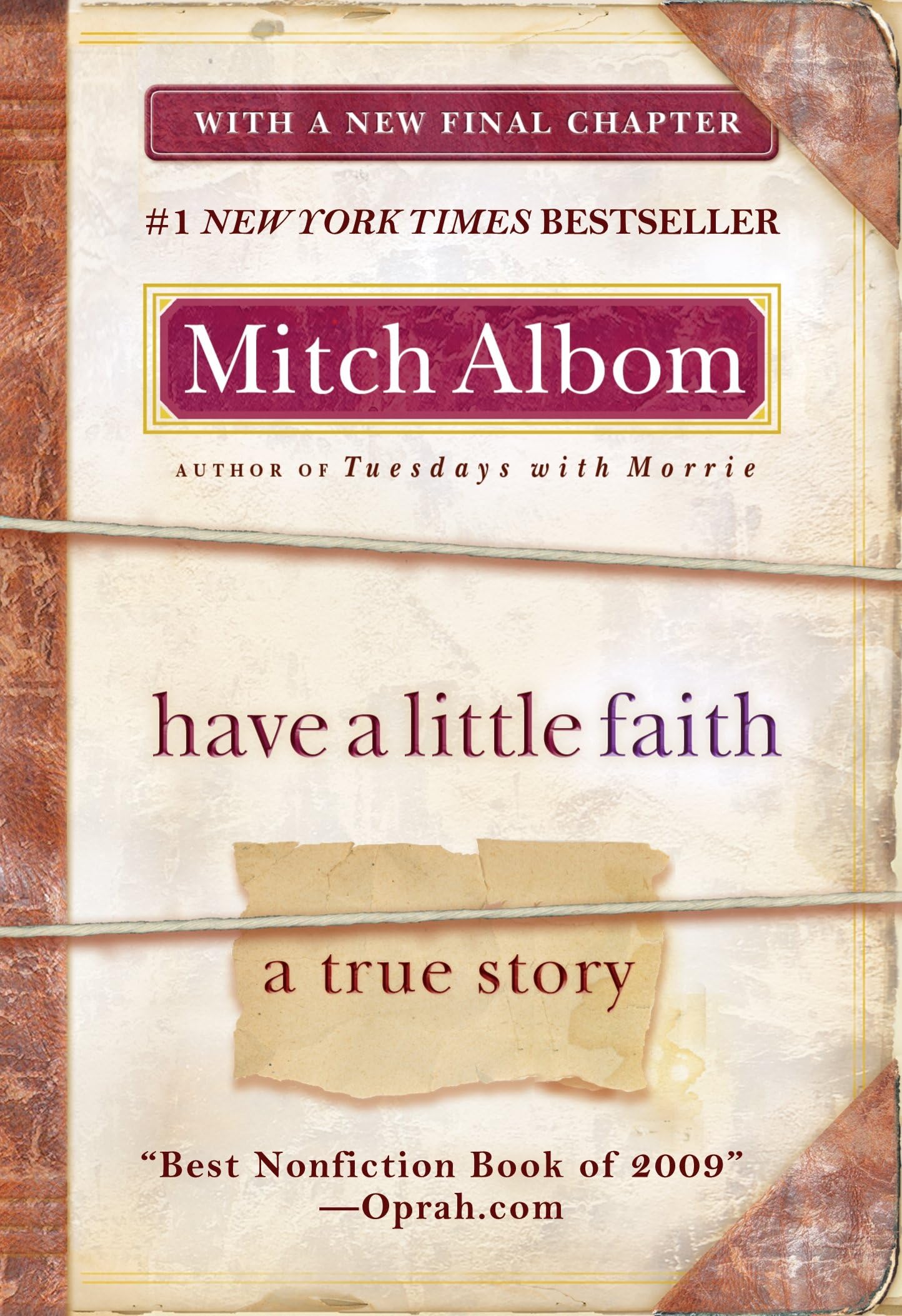
What if our beliefs were not what divided us, but what pulled us together? In Have a Little Faith , Mitch Albom offers a beautifully written story of a remarkable eight-year journey between two worlds -- two men, two faiths, two communities -- that will inspire readers everywhere. Albom's first nonfiction book since Tuesdays with Morrie, Have a Little Faith begins with an unusual request: an eighty-two-year-old rabbi from Albom's old hometown asks him to deliver his eulogy. Feeling unworthy, Albom insists on understanding the man better, which throws him back into a world of faith he'd left years ago. Meanwhile, closer to his current home, Albom becomes involved with a Detroit pastor -- a reformed drug dealer and convict -- who preaches to the poor and homeless in a decaying church with a hole in its roof. Moving between their worlds, Christian and Jewish, African-American and white, impoverished and well-to-do, Albom observes how these very different men employ faith similarly in fighting for survival: the older, suburban rabbi embracing it as death approaches; the younger, inner-city pastor relying on it to keep himself and his church afloat. As America struggles with hard times and people turn more to their beliefs, Albom and the two men of God explore issues that perplex modern man: how to endure when difficult things happen; what heaven is; intermarriage; forgiveness; doubting God; and the importance of faith in trying times. Although the texts, prayers, and histories are different, Albom begins to recognize a striking unity between the two worlds -- and indeed, between beliefs everywhere. In the end, as the rabbi nears death and a harsh winter threatens the pastor's wobbly church, Albom sadly fulfills the rabbi's last request and writes the eulogy. And he finally understands what both men had been teaching all along: the profound comfort of believing in something bigger than yourself. Have a Little Faith is a book about a life's purpose; about losing belief and finding it again; about the divine spark inside us all. It is one man's journey, but it is everyone's story. Ten percent of the profits from this book will go to charity, including The Hole In The Roof Foundation , which helps refurbish places of worship that aid the homeless. Review: The book got me viewing life through a different framework--something I like to do from time to time. - Mitch Albom wrote one of my favorite books of the past 15 years, TUESDAYS WITH MORRIE . . . I don't know if his latest effort, HAVE A LITTLE FAITH (see also Sections 2, 4C, 10 and 11), tops it . . . but it is definitely up there with any list of current books that I'd strongly recommend. FAITH begins when Albom is summoned to deliver the eulogy of the rabbi from his New Jersey hometown . . . though the rabbi is still living, he has chosen the author as the man to do the job in the future . . . Albom accepts, but only on the condition that he gets to conduct a series of interviews with the rabbi to get to know him better. Around the same, Albom also becomes involved with a Detroit pastor who also happens to be a reformed drug dealer and convict . . . his church has its own problems; i.e., it is decaying and there's a hole in its roof. The writing repeatedly moved me . . . to cite one such passage where that was the case: * . . . and I am in my religious high school. The subject is the parting of the Red Sea. I yawn. What is left to learn about this? I've heard it a million times. I look across the room to a girl I like and contemplate how hard it would be to get her attention. "There is a Talmudic commentary here," the teacher says. Oh, great I figure. This means translation, which is slow and painful. But as the story unfolds, I begin to pay attention. After the Israelites safely crossed the Red Sea, the Egyptians chased after them and were drowned. God's angels wanted to celebrate the enemy's demise. According to the commentary, God saw this and grew angry. He said, in essence: "Stop celebrating. For those were my children, too."Those were my children, too. "What do you think of that?" the teacher asks us. Someone else answers. But I know what I think. I think it is the first time I've heard that God might love the "enemy" as well as us. Years later, I will forget the class, forget the teacher's name, forget the girl across the room. But I will remember that story. In addition, I liked the several stories that were interspersed throughout, including this one: * A man buried his wife. At the gravesite he stood by the Reb, tears falling down his face. "I loved her," he whispered. The Reb nodded. "I mean . . . I really loved her." The man broke down. "And...I almost told her once." The Reb looked at me sadly. "Nothing haunts like the things we don't say." Lastly, the book got me viewing life through a different framework--something I like to do from time to time . . . here Albom describes a realization that he came to while driving home one night: * That I am neither better nor smarter, only luckier. And I should be ashamed of thinking I knew everything, because you can know the whole world and still feel lost in it. So many people are in pain--no matter how smart or accomplished--they cry, they yearn, they hurt. But instead of looking down on things, they look up, which is where I should have been looking, too. Because when the world quiets to the sound of your own breathing, we all want the same things: comfort, love, and a peaceful heart. Even though the holiday gift-giving season will have passed by the time you read this review, I still recommend you purchase HAVE A LITTLE FAITH . . . not just for you; it also makes the ideal gift for any man or woman of the cloth that you know. Review: A Mitch Albom Must Read - "Have a Little Faith", by Mitch Albom, is basically two different stories about three men, two religious leaders from different faiths; Albom's childhood Rabbi (Reb), Henry a Christian Pastor from the inner city of Detroit and the author Mitch Albom. The story places Albom into two different religions, two different cultures and the worlds of those who have and those who have not. It is the tale of his encounters with these men and his skepticism of all religions. The story starts with Mitch Albom's childhood Rabbi asking him the favor of writing and delivering his eulogy when he passes after service one day. He is caught off guard by rabbi's request because he no longer lives in the area and is not a regular participant at services. Finally he agrees to the request with the condition that he gets to know him better as a man. Reb agrees to his condition and this makes Mitch a bit uncomfortable because he know it will put him back into his synagogue and faith he left behind years ago. He begins his weekly trips back and forth from Detroit to visit the Reb, with many health scares over the years and learns the life story of Reb and the strength of his faith thru many of life's trials. He nick names him the `singing rabbi' because of his love for song. Mitch begins to develop a relationship with Reb that becomes unexpected to him and it opens his eyes to his upbringing and the faith he never understand. Closer to home in Detroit, Albom is looking for an organization to support and encounters Henry a Christian Pastor, a reformed drug dealer and convict. Henry, the leader for "I Am My Brother's Keeper Ministries" preaches to the poor, cares for the homeless, criminals, addicts and anyone who needs him, for free because his church comes first. With any religion Albom is skeptic, but he is very skeptical about Henry's motives and his faith. After several meetings Albom finally decides to visit Henry's church without telling him and he discovers that even with a hole in the decaying church's roof Henry stays positive and faithful that God with take care of it when the time is right. Obstacles will not stop him for caring for the needy and doing the job he promised God he would do in His name. As he goes between the worlds of these two men he knows how different each is yet he sees how similar they are in their survival, faith and trust in God. Reb embraces his retirement, health issues and his own death as it approaches and Pastor Henry trusts that his mission for the needy will be met and his church will remain open. He doesn't understand it and is suspicious at times but as the years go on he sees how their faith transforms their lives. The ending is exactly what is expected, Mitch Albom giving Reb's eulogy, but what isn't expected is how the lives of these two different men change how Mitch Albom sees his own upbringing, his faith and the trust people place in God. It transformed him and fulfilled a part of his life that was empty. This is an easy read book and not a religious book by any means. It is the true, honest story of Mitch Albom's journey of regaining his faith and losing his cynical outlook on religion. It is the touching story of an ex-convict who changed his ways to help others and the story of a rabbi who enjoyed his life to the fullest to the very end. It is a book of experiences. Mitch Albom did a wonderful job with this story and I highly recommend it. Once you start reading you won't put it down and it will make you think once you begin to close the cover on the final page.
| Best Sellers Rank | #71,459 in Books ( See Top 100 in Books ) #65 in Christian Faith (Books) #116 in Religious Leader Biographies #781 in Memoirs (Books) |
| Customer Reviews | 4.7 out of 5 stars 7,302 Reviews |
B**D
The book got me viewing life through a different framework--something I like to do from time to time.
Mitch Albom wrote one of my favorite books of the past 15 years, TUESDAYS WITH MORRIE . . . I don't know if his latest effort, HAVE A LITTLE FAITH (see also Sections 2, 4C, 10 and 11), tops it . . . but it is definitely up there with any list of current books that I'd strongly recommend. FAITH begins when Albom is summoned to deliver the eulogy of the rabbi from his New Jersey hometown . . . though the rabbi is still living, he has chosen the author as the man to do the job in the future . . . Albom accepts, but only on the condition that he gets to conduct a series of interviews with the rabbi to get to know him better. Around the same, Albom also becomes involved with a Detroit pastor who also happens to be a reformed drug dealer and convict . . . his church has its own problems; i.e., it is decaying and there's a hole in its roof. The writing repeatedly moved me . . . to cite one such passage where that was the case: * . . . and I am in my religious high school. The subject is the parting of the Red Sea. I yawn. What is left to learn about this? I've heard it a million times. I look across the room to a girl I like and contemplate how hard it would be to get her attention. "There is a Talmudic commentary here," the teacher says. Oh, great I figure. This means translation, which is slow and painful. But as the story unfolds, I begin to pay attention. After the Israelites safely crossed the Red Sea, the Egyptians chased after them and were drowned. God's angels wanted to celebrate the enemy's demise. According to the commentary, God saw this and grew angry. He said, in essence: "Stop celebrating. For those were my children, too."Those were my children, too. "What do you think of that?" the teacher asks us. Someone else answers. But I know what I think. I think it is the first time I've heard that God might love the "enemy" as well as us. Years later, I will forget the class, forget the teacher's name, forget the girl across the room. But I will remember that story. In addition, I liked the several stories that were interspersed throughout, including this one: * A man buried his wife. At the gravesite he stood by the Reb, tears falling down his face. "I loved her," he whispered. The Reb nodded. "I mean . . . I really loved her." The man broke down. "And...I almost told her once." The Reb looked at me sadly. "Nothing haunts like the things we don't say." Lastly, the book got me viewing life through a different framework--something I like to do from time to time . . . here Albom describes a realization that he came to while driving home one night: * That I am neither better nor smarter, only luckier. And I should be ashamed of thinking I knew everything, because you can know the whole world and still feel lost in it. So many people are in pain--no matter how smart or accomplished--they cry, they yearn, they hurt. But instead of looking down on things, they look up, which is where I should have been looking, too. Because when the world quiets to the sound of your own breathing, we all want the same things: comfort, love, and a peaceful heart. Even though the holiday gift-giving season will have passed by the time you read this review, I still recommend you purchase HAVE A LITTLE FAITH . . . not just for you; it also makes the ideal gift for any man or woman of the cloth that you know.
M**Q
A Mitch Albom Must Read
"Have a Little Faith", by Mitch Albom, is basically two different stories about three men, two religious leaders from different faiths; Albom's childhood Rabbi (Reb), Henry a Christian Pastor from the inner city of Detroit and the author Mitch Albom. The story places Albom into two different religions, two different cultures and the worlds of those who have and those who have not. It is the tale of his encounters with these men and his skepticism of all religions. The story starts with Mitch Albom's childhood Rabbi asking him the favor of writing and delivering his eulogy when he passes after service one day. He is caught off guard by rabbi's request because he no longer lives in the area and is not a regular participant at services. Finally he agrees to the request with the condition that he gets to know him better as a man. Reb agrees to his condition and this makes Mitch a bit uncomfortable because he know it will put him back into his synagogue and faith he left behind years ago. He begins his weekly trips back and forth from Detroit to visit the Reb, with many health scares over the years and learns the life story of Reb and the strength of his faith thru many of life's trials. He nick names him the `singing rabbi' because of his love for song. Mitch begins to develop a relationship with Reb that becomes unexpected to him and it opens his eyes to his upbringing and the faith he never understand. Closer to home in Detroit, Albom is looking for an organization to support and encounters Henry a Christian Pastor, a reformed drug dealer and convict. Henry, the leader for "I Am My Brother's Keeper Ministries" preaches to the poor, cares for the homeless, criminals, addicts and anyone who needs him, for free because his church comes first. With any religion Albom is skeptic, but he is very skeptical about Henry's motives and his faith. After several meetings Albom finally decides to visit Henry's church without telling him and he discovers that even with a hole in the decaying church's roof Henry stays positive and faithful that God with take care of it when the time is right. Obstacles will not stop him for caring for the needy and doing the job he promised God he would do in His name. As he goes between the worlds of these two men he knows how different each is yet he sees how similar they are in their survival, faith and trust in God. Reb embraces his retirement, health issues and his own death as it approaches and Pastor Henry trusts that his mission for the needy will be met and his church will remain open. He doesn't understand it and is suspicious at times but as the years go on he sees how their faith transforms their lives. The ending is exactly what is expected, Mitch Albom giving Reb's eulogy, but what isn't expected is how the lives of these two different men change how Mitch Albom sees his own upbringing, his faith and the trust people place in God. It transformed him and fulfilled a part of his life that was empty. This is an easy read book and not a religious book by any means. It is the true, honest story of Mitch Albom's journey of regaining his faith and losing his cynical outlook on religion. It is the touching story of an ex-convict who changed his ways to help others and the story of a rabbi who enjoyed his life to the fullest to the very end. It is a book of experiences. Mitch Albom did a wonderful job with this story and I highly recommend it. Once you start reading you won't put it down and it will make you think once you begin to close the cover on the final page.
H**K
must read!
Such an inspiring and captivating story of 3 men! Amazing read for people of all faiths and walks of life.
J**H
A pleasant read
"Have a Little Faith" is Mitch Albom's inspirational follow-up to his "Tuesdays With Morrie." As such, it is fine, along the same track. He is asked by his former hometown (New Jersey) rabbi (Albert Lewis) to write his eulogy, so he accepts but wants to learn about the guy as a human being over a period of his final eight years of life. In the process he also comes in contact with a pastor (Henry Covington) in his recent hometown (Detroit) while reporting on a homeless shelter. In the process of learning more about each religious leader he gains insights about what faith is. Here are some things he learns in getting to know both men: 1. Rituals are a major part of the rabbi's life. Faith is more about doing than believing. It is how from generation to generation we remain connected. Since faith hadn't meant much to Mitch, he would try to understand how it put the rabbi at peace. Even in retirement the rabbi kept a community, through his address book, by calling and sending emails for milestones - birthdays, anniversaries, etc. Even during times of horror/war you an find small acts of kindness. Be satisfied with simple things, the rabbi had learned from the Depression. People want to be known, hence there is immortality in being remembered. Mitch had learned from the rabbi that according to the Talmud, G-d didn't like Jews celebrating when the Egyptians died during the Exodus, because G-d loved their enemies too. When asking the rabbi how he knows there is a G-d, the rabbi says there is always something we can't understand and that's were G-d begins - the unknown. Mitch asks the rabbi if our nature is evil - nowhere in liturgy did G-d create bad things - we were left with free will. 2. The pastor first felt faith while in jail after a life of crime, after first promising to G-d to change his life after nearly being killed during his crime years, then rising in the church ranks from elder to pastor. He wondered why he had been born and came across a biblical passage about Job cursing his birth. Even when cursing G-d when something bad happens there is even some confort to think G-d listened but said "No." Throughout his life of crime he kept on getting second chances - he thought maybe G-d had punished him when his young daughter died. Better to have known the child even for a few short years than never at all, hence still some good. You are not your past. A life is made up of many lives - the most recent life is the most important. Forgiving is important - don't hold grudges - nothing haunts like things you don't say - loving thoughts. Mitch was able to understand the pastor best by talking to his congregants, what things he had done to help them. Mitch asked the pastor if he wanted to do better financially - he said he was meant to be with the poor. 3. Mitch read about different religions as being connected to something big while doing something small. 4. From both the rabbi and pastor he learned that people expect too much from marriage. Commitment is the most important part. Tribulations will occur (especially in the pastor's life), but getting past them is what makes the marriage endure. 5. How can religions co-exist. Teaching that human life began with just one man, Adam, which produced all varieties - the genius of life is variety. - most religions teach to love your neighbor. As for the afterlife, just believing something exists is enough. 6. The eulogy included Mitch's learning that different faiths can work side by side. It was 'majestic' that the rabbi could not speak at his eulogy - that's where faith comes in. It is a summary of memories where each of the congregants will have some while going back home. The whole purpose of Mitch during these eight years was not really the eulogy, but the journey to belief. In summary, Mitch delved into the lives of two religious leaders and came away with an understanding that the real fulfillment of a person is that one can improve if they have a little faith in something bigger than them. The book is short and an easy read.
S**A
Another book you'll have to keep forever.
I love the way Mitch Albom's books always leave you feeling warm and appreciative. No matter what your beliefs are in regards to God or where you stand on religion, you will be able to relate with this story and finish feeling like life isn't that bad after all. I highly recommend all of Mr. Albom's books.
C**S
Great book.
This book will make you think about alot of things and start to look at things differently. This book was a great read.
W**T
One of my favorite books.
This is a book about religion and tolerance and having faith. It's written by a man who I consider to be one of the best writers living today. It's meant to evoke emotion and make the reader take a step back and consider themselves, especially their beliefs, values, and relationships. It's a good book for anyone of any religious belief or no religious belief or questioning religious belief. It is not a book that tries to impose anything on the reader. It's a non-fiction compilation of things that the author learned about and from two religious figures in his life, and the extension of those influences throughout his life. Have a Little Faith is extremely moving. I cried several times during many parts of the story and was genuinely inspired by many parts as well. It has many applicable quotes and messages of wisdom for readers today, completely regardless of what religion the reader is or is not. This book is a learning experience written in a powerful but relatively short manner, but every word is important and it is definitely a book that was created for a purpose. It is innocuous but powerful; if it were possible for everyone in the world to sit down and read this book together, we would all surely come out with a lot more understanding of one another and a lot more respect for others and ourselves, and the differences that distinguish us and cause conflict. It's really one of the best books I have ever read, and I think about it often when I feel unsure about myself or feel like I need to be more steadfast in my beliefs or more considerate of others'. I would definitely recommend this to anyone, ever, and I truly think that reading this book changes the reader for the better.
A**R
excellent read
I was in tears and I never cry with books. A truck story about 2 amazing men of God. So good
J**1
A must read book
Do not think twice buy this book
M**A
A lovely book
This is a lovely book. Short, easy to read and inspiring. Many stories in the book will stay with me for a long time.
E**T
MorrieをAlbert Lewisに置き換えた良書
Tuesdays with MorrieのAlbert Lewis版に置き換えたノンフィクションです。 Mitch AlbomにはやはりNon fictionを書いてほしいと思わせる良い作品です。 Eulogyとは、お葬式で死者に対して生前の人物と業績への賛辞を語ることです。 この本は、Albert Lewis牧師から「eulogy」を依頼されて(2000年当時82歳)から、 牧師(本の中ではRebと呼んでいる)が亡くなるまで(2008年、90歳)のAlbertとMitchの 会話が、骨格です。Morrieの会話が重なってイメージされました。 もう一人の登場人物が、Henry Covington。 彼は典型的なチンピラで悪いことをやりほうだいの人物ですが やがて教会でHomelessの支援を行います。 Morrieには「死ぬということはどういうことか?」と質問したように、 Albertには「神を信じると言うことはどういうことなのか?」を、素朴に 質問するようになります。 Why do bad things happen to good people? (P80) But so many people wage wars in God's name.(?) (P91) 心のヒーリングに関する本や、成功物語の本は沢山出版されていますが、 それ以上に癒される本です。 特に、Tuesdays with Morrieに共感した読者に対しては癒す作用が 強く働くと思いました。 もちろん、最後に6ページにわたるEulogyが記述されています。
I**E
God in a Book
We transport between two cultures, two faiths two men of God . And find that though they do not preach to us, God is shown living through and with them.
N**D
wertvoll und sehr lesenswert
Das Buch spricht eine Seite des Lebens an, die wesentlich ist. Man kann meinen, sich noch so sehr von Gott entfernt zu haben, wenn eine echte Sehnsucht nach Leben in Wahrheit vorhanden ist, benutzt Gott wundervolle Wege Sein, Gottes Wesen, bewußt und lieb zu machen und Vertrauen in IHN zu stärken..Der Autor vermittelt das durch sein Leben und die Art wie es schreibt sehr gut.
Trustpilot
1 week ago
2 months ago